TECHNIQUES FOR HIGH-DIMENSIONAL DATA REDUCTION
DOI:
https://doi.org/10.71465/csb48Keywords:
High-dimensional data, dimensionality reduction, Principal Component Analysis (PCA), Linear Discriminant Analysis (LDA), t-SNE, Auto encoders, machine learning, data visualizationAbstract
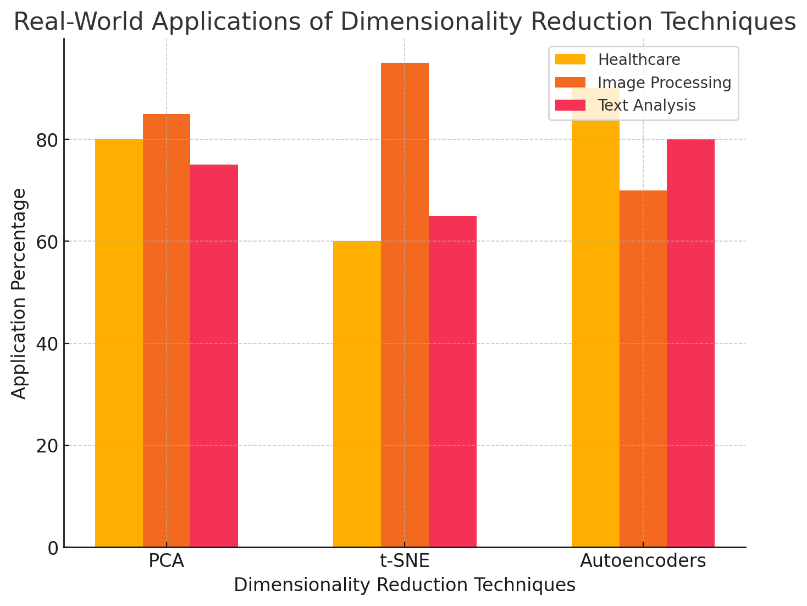
High-dimensional data, characterized by an increased number of features or variables, poses significant challenges in data analysis due to the curse of dimensionality, leading to overfitting, computational inefficiencies, and interpretability issues. This paper explores various techniques for reducing the dimensionality of datasets while retaining as much meaningful information as possible. These techniques are essential for improving the performance of machine learning models and for enhancing data visualization. We examine traditional approaches such as Principal Component Analysis (PCA), Linear Discriminant Analysis (LDA), and more recent methods such as t-Distributed Stochastic Neighbour Embedding (t-SNE), Auto encoders, and Deep Learning-based techniques. The advantages, disadvantages, and applications of each technique are discussed with real-world examples. Furthermore, we propose a hybrid model that combines the strengths of these techniques for optimal dimensionality reduction.
Downloads
Published
Issue
Section
License
Copyright (c) 2020 Dr. Syed Waqar ul Qounain Jaffry

This work is licensed under a Creative Commons Attribution 4.0 International License.
All articles published in the Computer Science Bulletin are distributed under an open access license, allowing unrestricted use, distribution, and reproduction in any medium, provided the original work is properly cited. Authors retain copyright and grant the journal the right of first publication. The journal encourages knowledge sharing while maintaining academic integrity and proper attribution.