WEARABLE TECHNOLOGY AND ITS IMPACT ON HEALTHCARE MONITORING
DOI:
https://doi.org/10.71465/csb123Keywords:
Wearable devices, healthcare monitoring, mHealth, biosensors, real-time data, remote patient monitoring, digital health, personalized medicineAbstract
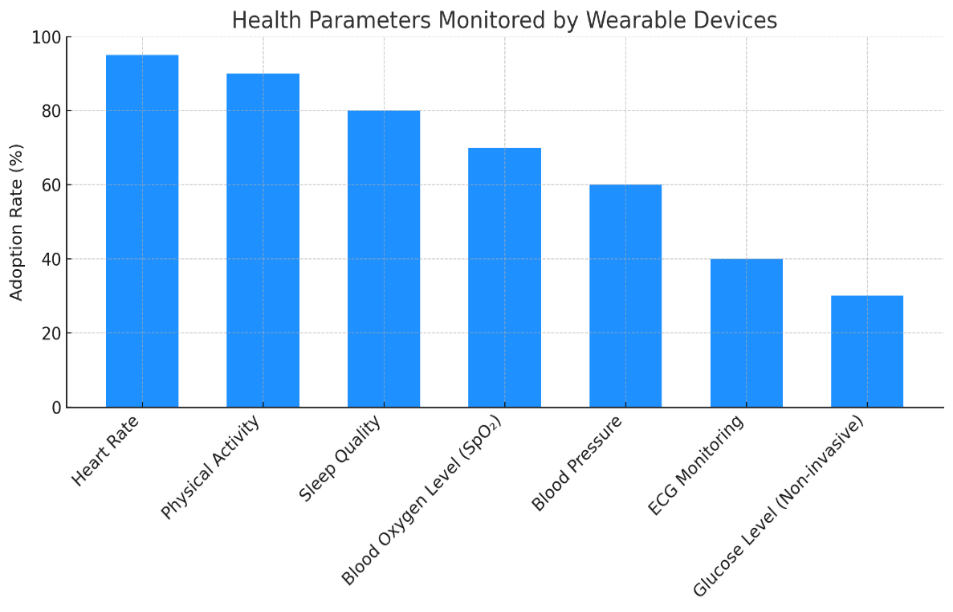
Wearable technology has emerged as a transformative tool in healthcare, enabling continuous, real-time monitoring of physiological parameters such as heart rate, blood pressure, and glucose levels. By integrating sensors, wireless communication, and data analytics, wearable devices support proactive healthcare management, early diagnosis, and personalized treatment. This paper explores the types and functions of healthcare wearables, evaluates their benefits and limitations, and assesses their impact on clinical outcomes and patient engagement. Key challenges—including data privacy, interoperability, and regulatory concerns—are also discussed. The study concludes with future directions and opportunities for integrating wearable technology into mainstream healthcare systems.
Downloads
Published
Issue
Section
License
Copyright (c) 2024 Computer Science Bulletin

This work is licensed under a Creative Commons Attribution 4.0 International License.
All articles published in the Computer Science Bulletin are distributed under an open access license, allowing unrestricted use, distribution, and reproduction in any medium, provided the original work is properly cited. Authors retain copyright and grant the journal the right of first publication. The journal encourages knowledge sharing while maintaining academic integrity and proper attribution.