ETHICAL IMPLICATIONS OF LARGE LANGUAGE MODELS
DOI:
https://doi.org/10.71465/csb10Keywords:
Large language models, artificial intelligence ethics, bias in AI, environmental impact, governance, transparency, accountabilityAbstract
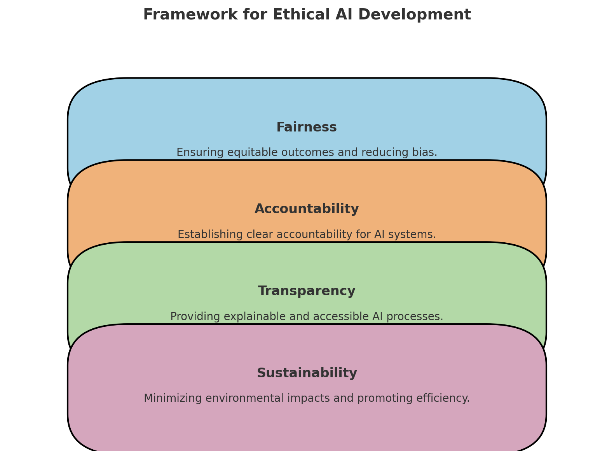
The advent of large language models (LLMs) such as Open’s GPT series has revolutionized natural language processing, enabling ground breaking advancements in artificial intelligence applications. However, these models also raise significant ethical concerns, including biases in generated content, misuse potential, and the environmental cost of large-scale training. This study explores the ethical dimensions of LLMs, examining their impact on society, governance, and technological development. Through an analysis of existing literature and practical use cases, this paper highlights the urgent need for regulatory frameworks, transparent AI practices, and interdisciplinary collaboration to mitigate these challenges. Recommendations for ethical LLM development and deployment are proposed, emphasizing fairness, accountability, and sustainability.
Downloads
Published
Issue
Section
License
Copyright (c) 2018 Computer Science Bulletin

This work is licensed under a Creative Commons Attribution 4.0 International License.
All articles published in the Computer Science Bulletin are distributed under an open access license, allowing unrestricted use, distribution, and reproduction in any medium, provided the original work is properly cited. Authors retain copyright and grant the journal the right of first publication. The journal encourages knowledge sharing while maintaining academic integrity and proper attribution.